Visar inlägg med etikett Förkovran. Visa alla inlägg

måndag 10 oktober 2011

Jag mötte Lassie!

Eller i varje fall Aidan Chambers! Jag var på en eftermiddag om boksamtal och läsning idag och lyssnade på honom och Katarina Kuick.

Kuick höll ett boksamtal med oss deltagare om Anna-Clara Tidholms Hanna huset hunden, som var väldigt inspirerande, konkret och användbart.

Vi gick igång helt i det gemensamna uttolkandet av denna mörka, surrealistiska bilderbok. Det blev ett väldigt bra samtal.

Chambers föreläste om läsning: hur vi verkligen lära oss läsa, vad som händer i hjärnan. Hur det blir lättare att läsa ju mer vi läser eftersom hjärnan bygger upp ett allt rymligare arkiv med ord och meningar.

Han berättade att i England håller utbildningsväsendet på att återgå till en förkrigspedagogik där läsning är någonting mekaniskt: fonetik, grammatik, alfabet. Läsning av litteratur, skönlitteratur, läsning för nöjes skull blir mer sällsynt.

Så är det tack och lov inte i Sverige, även om läsningen i skolsituationer ofta kanske inte handlar om nöjesläsning för elevernas del ...

Variation är viktigt, menar Chambers. Vi behöver läsa olika slags texter, lyssna på olika slags musik, olika slags samtal och konversationer. Då ökar vi vår läsrepertoar.

Det är extra intressant med Chambers för att han själv har viss dyslexi, hade svårt för att lära sig läsa och blev en läsare sent.

Nu har han skrivit mängder utav böcker och föreläser om läsning.

Efter programmets slut gick jag fram till honom och tackade så mycket för Det här är allt: Cordelia Kenns kuddbok och försökte sammanfatta varför jag dyrkar den boken.

(En bok som dessutom Katarina Kuick har översatt till svenska - och lyckats förträffligt med!)

Han blev glad; lite extra så för det var hans älsklingsbok också av alla han själv skrivit. Fint.

söndag 30 januari 2011

Gråt inte! Gör motstånd!

Var glad! Gå till angrepp! Så lyder en av uppmaningarna i Ebba Witt-Brattströms bok om 70-talets kvinnorörelse, Å alla kära systrar!

Detta är en brokig berättelse om Witt-Brattströms liv under 70-talet och hennes väg från litteraturintresserad skolflicksflicka till superengagerad kvinnorättsaktivist, genom bland annat Grupp 8, familjebildning och vidare till den akademiska kvinnoforskningen.

Strukturerad med årtal och intervjuer känns boken ändå ofta som en stream of consciousness, där författarens egna tankar, anekdoter och reflektioner kastar oss från ämne till ämne. Resultatet är en fascinerande skildring av en tidsepok, en kamp och en kvinnas liv.

Flera saker som denna tids feminism kämpade för - som att kvinnor skulle ha tillträde till alla slags arbeten och dagisplatser för alla barn - är saker som vi, dagens feminister, på många sätt tack vare detta kan ta för givet.

Andra saker, tyvärr, känns fortfarande lika problematiska. Många av Grupp 8:s paroller ekar fortfarande på feministiska demonstrationer idag. Exempelvis Lika lön för lika arbete eller Vi tar natten tillbaka.

Porrfrågan känns än mer tragisk idag, genom bland annat internets explosion och en diskursiv tendens att väcka liv i myten kring den lyckliga horan. (Även om de sexualiserade bilderna av kvinnor i offentliga rum numer brukar ha bikini/underkläder på sig, till skillnad från Fibban och Lektyr-affischerna som visas i boken.)

Flera saker berör mig personligen: Witt-Brattströms tankar kring kärleksrelationer, barn, familjebildning, kärnfamiljsideologi, etc. är något som känns lika brännande aktuellt och komplicerat för undertecknad idag.

Grupp 8:s kunskapstörstande och medvetandehöjande åtgärder, det som Witt-Brattström beskriver som ett "barfotauniversitet" (underbart ord!), inspirerar.


Det känns delvis som att jag med mina närmsta vänninor gör just detta, i vår privata lilla cirkel. Läser litteratur, diskuterar, går på teatrar, ser filmer, talar om våra erfarenheter, stöder och bygger upp varandra. Utan detta blir livet så torftigt och ensamt.

Också detaljer fastnar, som exempelvis korsstygnsmönstret med ett kvinnomärke på från 1973 - exakt samma mönster som min vänninna E använder idag när hon broderar! Detta gör mig glad.

måndag 24 januari 2011

Slut på kursen!

Nu har jag avslutat min högskolekurs om 7,5 poäng - Science fiction & Fantasy - med högsta betyg. Känns fint!

En extra bonus är också att jag nu kan välja böcker själv hela våren, vilket jag verkligen ser fram emot.

söndag 16 januari 2011

Kursmoment 6: The Speed of Dark

En av 2010 års främsta läsupplevelser var Elizabeth Moons roman The Speed of Dark, som ingick i min kurs.

Den utspelar sig i en snar framtid och följer en ung man vid namn Lou Arrendale, som har autism. Han bor ensam, arbetar med komplicerade datorsystem vid ett stort läkemedelsföretag (tillsammans med flera andra personer med autism) och har fäktning som hobby.

Men Lous fasta rutiner störs av flera stora händelser - någon börjar stalka honom och hotar skada både hans egendom och honom själv.

Aktuell forskning visar plötsligt på möjligheter att bota autism vid vuxen ålder - barn som föds med autism botas omgående i denna sekundärvärld, men Lou och hans vänner är för gamla för att ha varit med om detta.

Detta leder till att Lous chef iscensätter en komplicerad intrig där han hotar sparka sina autistiska anställda om de inte ställer upp på de högst experimentella behandlingarna.

Än mörkare motiv anas i bakgrunden - någonting om att kunna plocka autistiska drag (savanthet, koncentrationsförmåga) och överföra dem till människor som exempelvis ska arbeta i rymden. Klart av ekonomiskt intresse för det stora företaget, alltså.

Vad boken framförallt är, är en djupdykning i en människans sinne och liv. Lous perspektiv följs konsekvent genom romanen och det är fullständigt uppslukande läsning.

Förutfattade meningar om normalhet ställs helt på ända. Detta har diskussionerna på forumet rört sig mycket kring.

***

It’s fascinating to find that so many of us seem to really have shared similar reading experiences through the course – of course we have read the same books, but often we seem to interpret them similar as well.

I was so completely hooked by this novel – one of the most interesting and moving in a long time. And I’m not entirely sure why. T, I agree with you – it’s difficult to get Lou out of one’s mind!

From page one Moon constructs an us-and-them-sense which, as already been pointed to in the discussions, often puts us as readers closer to the “us” perspective, e.g. the autistic perspective.

Like J points out, Moon makes us as readers really see Lou and sympathize with him. But it’s never about pitying him. He’s depicted as a whole human being.

“If they aren’t going to listen, why should I talk?”, Lou asks himself in the beginning, while at the psychiatrist’s office. Consistently throughout the novel Moon holds the narrative close to Lou’s perspective and really show how many things that we may consider natural and obvious are in fact … well, not.

A lot of sayings, if you interpret them literary, are really illogical. Like someone being a heel, for instance, which Lou reflects upon. This is certainly one of the difficulties for someone trying to learn a new language – to be able to decipher these cultural references. This also holds true for someone autistic, as is repeatedly shown in the novel.

Many social situations that Lou deciphers in the text show us how complicated, illogical and not-honest “normal” people in general are. Like Don, who appears to be a friend but is really a foe.

Because Lou works so hard trying to interpret nuances in voices and facial expressions he often gets confused by people saying things they obviously don’t mean. The communication between the autistic characters in the book is depicted as more direct and honest. If no one wants to talk, they simply don’t.

The fact that different rules seem to apply for autistics and “normal” people is also commented on, for instance: “Aldrin closes his eyes, refusing contact. I was scolded for doing just that.” (s. 149) If you’re considered normal, you have a lot more freedom. If you’re autistic, everything will be viewed against that.

As all of you have pointed out, the concept of normal just doesn’t cut it after reading this novel (not that it did before!).

I see a lot of myself in the character of Lou, like the need for routines, a systematic way of working and his tendency to feel overwhelmed in social situations, like when travelling with public transports. I, for instance, have these tendencies as well, but Lou feels them stronger.

Like T pointed out, this book actually disturbs one’s way of looking at the world and taking people for granted. It made me stop and think how frail communication between people are – if all of our brains work in different ways, how are we able to communicate with each other at all?

Essay 3: The meaning of life in Biting the Sun

(Klicka på Fullscreen för att kunna läsa bättre!)

Essay 3 - Fia Larsson - Biting the Sun

torsdag 6 januari 2011

Kursmoment 5: Biting the Sun

När jag först började läsa Tanith Lees Biting the Sun drogs tankarna till A Clockwork Orange. Vi följer en namnlös huvudkaraktär, en medlem i ungdomssubkulturen the Jang (the young?), oftast kvinnlig men ibland man, i ett hetsigt virrvarr av egenpåhittad slang, sex, mode, droger och andra tidsfördriv.

När hen tröttnar på det ytliga livet som jang och söker efter någonting äkta och annorlunda blir hen fullständigt motarbetad av samhället. Drastiska åtgärder krävs.

Vi diskuterade bland annat om världen som skildras är utopisk eller dystopisk, den implicita författaren samt sociala strukturer. Jag har också skrivit en essä om boken ifråga, som finns att läsa här i bloggen.

söndag 26 december 2010

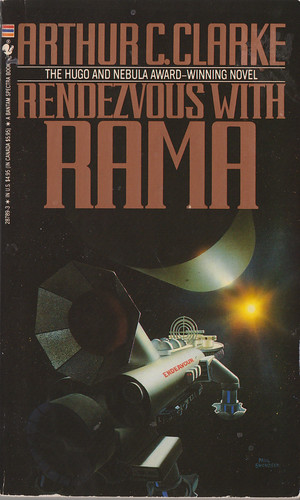
Kursmoment 4: Rendezvous with Rama

När jag läste Arthur C. Clarkes SF-klassiker Rendezvous with Rama till min kurs blev jag, överraskande nog, helt hooked.

Jag har aldrig trott att jag egentligen gillar SF - förutom 1984, Brave New World, Kallocain, The Host, Hungerspelen, China Miéville ... Jag antar att det är dags att inse att jag visst gillar SF!

Rama, en enorm cylindrisk farkost som färdas genom universum med en hisnande hastighet, dyker upp i vårt solsystem under en kort period.

Ett rymdteam har några korta veckor på sig att upptäcka Rama, som framstår som både både hisnande och klaustrofobisk. Och framförallt helt okänd.

Kombinationen av det spektakulära med Rama - en uråldrig, främmande, artificiell värld - och den allmänmänskliga känslan var lysande. Trots att det egentligen inte händer så mycket i romanen så är den vansinnigt spännande.

Jag bjuder på mitt skrivande från forumet, där jag tar upp miljöer, sociala strukturer och den implicita författaren.

***

The novel is set in the future for Clarke, as well as for us readers, in the 22nd century. Although it’s written in the 70ies it actually manages to depict a plausible vision of a future, in my opinion.

T, although I find your description of humankind a bit too misanthropic, I absolutely agree with you on the fact that humans don’t seem to have changed that much. The fact that Commander Norton idolizes Captain Cook and draws several parallels to his fate as an explorer also enhances this feeling (e.g., p. 81 and onward).

The novel mostly takes place inside of Rama and we readers are made aware of every small change in the world of Rama.

Rama is described as being very vast. And as an artificial world housed in a great flying object twirling round in space I suppose it is. Inconceivable so. But I’m also struck by the grandness of the universe as the small Endeavour closes in on Rama in the beginning of the book.

Humankind doesn’t seem to have changed much. Spread out on several planets in the galaxy, as well as the moon, human relations still seem to be very much like in our time.

Instead of a United Nation there is the United Planets, trying to get humankind organized and collaborating with each other. The Rama Committee is an interesting example of group dynamics, where persons of great reputation from different planets as well as academic disciplines argue in between.

“’With all due respect to the Ambassador’, said Taylor in his most disrespectful voice.” (96) Often I feel that personal ego and pettiness risk standing in the way of actual efficiency.

The team on Endeavour seem much more harmonious, although they also consist of very different people. Commander Norton’s domestic issues seem relevant today as well, although he has two families instead of one.

Considering gender issues – Clarke places competent female characters along with the male ones in both the Rama Committee as well as in Endeavour’s crew, although the females are in minority.

That Norton’s got two wives is not problematized but that Mercer and Calvert are married to the same women is depicted as something unusual. This says something about the gender structures.

The implied author, for me, is someone who has great knowledge of technology related to both space travels and communication. Devices like air locks and space suits feel plausible to me, as well as the using of space jargon, like EVA (which at least I had to look up).

The novel is built a lot around the communication between people, for instance between the different crew members exploring Rama as well as their communication with the surrounding worlds – the Rama Committee, their families, etc.


The relations between the characters feel quite plausible, as does the greater social structures of the United Planet, the Rama Committee and other interplanetary situations. This hints to some knowledge of both psychology and sociology.

The gender issues I’ve pointed out leads me to think that the implied author is aware of inequalities between genders, but is still to much a child of his time to be able to stand completely outside the established gender order.

(As shown for instance by the passage on page 48 where Norton takes about the combination breasts and weightlessness and the previously discussed differences concerning polygamy.)

söndag 5 december 2010

Bokmalans betyg II

Essä nummer två, som handlade om Coraline, fick också högsta betyg:

"Very good essay, I like Nikolajeva's works myself and consider fantasemes to be an interesting topic for discussions. Your grade is VG."

Hurraaa!, säger Bokmalan, som håller på med det sista på Rendezvous with Rama och snart skall påbörja Tanith Lees Biting the Sun. To be continued ...

söndag 28 november 2010

The door, the dream and other fantastical elements

In this essay I aim to explore some of the fantastical elements used in the children’s fantasy novel Coraline by Neil Gaiman. I use literary professor Maria Nikolajeva’s book The Magical Code (1988) as a tool for finding these elements – elements that Nikolajeva calls fantasemes.

The secondary world in Coraline seems to exist parallel with “our” reality and is accessible from the primary world through a portal. The door and the mysterious tunnel are the passageway to the other world. The door is portrayed as a mystery, something forbidden as it’s in the room where Coraline is not allowed and it’s accessed with a great rusty key.

But although the secondary world is open, it is, of course, not open to anyone. For instance, when Coraline’s mother open’s the door, nothing happens: “Her mother was right. The door didn’t go anywhere. It opened into a brick wall.” (p. 9) But when Coraline opens the door herself, this scene emerges:

Coraline put her hand on the doorknob and turned it; and finally, she opened the door. It opened on to a dark hallway. The bricks had gone as if they’d never been there. There was a cold, musty smell coming through the opened doorway: it smelled like something very old and very slow. (p. 26)

It could be read as a comment on how Coraline’s parents doesn’t give her enough attention as well as a way of showing how grown ups in general focuses on more mundane things than children, hence missing the magic. This is recurrent in children’s fiction and in children’s fantasy especially.

The dream, often used as a passageway in fantasy , doesn’t have that function in Coraline. But it serves as sort of a warning of things to come, for instance when Coraline dreams of meeting a rat and follows it to the drawing room, where the main gateway actually exists (p. 10).

We gather there might be other passageways as well, like the cat’s ability to move between realities. Later on we realise that Coraline isn’t the only child who have been visiting the secondary world, when she finds the ghosts of the other children.

Nikolajeva discusses journey patterns in children’s fantasy and establishes that the most common pattern in the circular journey. The character (or characters) makes a travel to the secondary world and then return to the safe haven of home. Gaiman toys a bit with this notion.

Firstly, Coraline is forced to enter the passageway to the other world a second time, after returning and finding her parents missing. Also, to remove the parents is a very effective way to make the whole text seem unsure and not safe.

Like I wrote on the forum, the secondary world consists of the elements of Coraline’s reality – her house, the closest surroundings, her parents and the other people living in the building. But all the elements are slightly twisted and changed, in a silently threatening manner. This makes the secondary world more confusing and creepy than if it had been a completely different universe.

Secondly, when Coraline returns to her real home the second time, the threat of the Beldam is still present. Not even the primary world is allowed to be a safe haven. So, the goal must be not only to arrive at the primary world, but to cut off all connections to the threatening secondary world.

Many of the magical items existing in fantasy derive from folk lore, myth and fairie tales. In Coraline we have the magical mirror, which we recognize from Snow White as well as Through the Looking-Glass.

It doesn’t function as a passageway in Coraline, but it serves other purposes. When the other mother kidnaps Coraline’s parents, she is able to see this through the mirror. Also the mirror functions as a prison for Coraline and the ghost children:

She pulled Coraline back into the hallway and advanced upon the mirror at the end of the hall. Then she pushed the tiny key into the fabric of the mirror, and she twisted it. It opened like a door, revealing a dark space behind it. [---] There she swung the mirror closed, and left Coraline in darkness. (p. 80)

Another magical item is the seeing-stone that Coraline gets from Miss Spink. The stone works as a protection for Coraline, and it allows her to feel safer when spending time in the strange secondary world. It’s also used as a weapon in the struggle against the other mother, when Coraline uses the stone to be able to find the souls of the ghost children (for instance, p. 97). The souls actually take the form of small glass marbles, which is suiting – to put something serious and vitally important into the form of an ordinary toy.

Connected to the magical items is also the concept of a magical helper, writes Nikolajeva, which in children’s fantasy often consists of talking animal, preferably domestic ones. Like the cat in Coraline. But cats may also be viewed as magical creatures with connotations to witchcraft.

The cat often serves as a reluctant helper to Coraline throughout the novel, for instance, in telling that the Beldam is fond of “games and challenges” (p. 65) It is also the cat that shows Coraline that her parents are missing, although he can’t speak in the primary world. “The cat made no reply, but Coraline could imagine its voice, as dry as a dead fly on a windowsill in winter, saying Well, where do you think they are?” (p. 54)

Typically, the rats serve as minions to the other mother, as rats often are associated with filth and diseases. The mice in the novel, however, serve as messengers twice in the novel, warning Coraline about the going through the door in the beginning and finally telling her the primary world is safe again in the end.

To conclude – it was quite easy to establish some of the fantasemes used in Gaiman’s Coraline. The structure of the secondary world as only open to some creatures (Coraline, the cat, the earlier children). The door is a classical fantaseme, though in this version it is accompanied by the mysterious tunnel as well.

Classical is also the function of the dream as something more than just a dream. In this case, the dream serves as a sort of warning or premonition for Coraline.
Gaiman builds his novel on the circular journey pattern often used in children’s fantasy, but makes it into a loop movement: there and back again and then there and back again, again, so to speak.

To use the protagonist’s primary world as a model for the threatening secondary world, like Gaiman does, is not the most common thing in fantasy. This increases the feelings of insecurity and threat in the text, in my opinion. As does the fact that the dangers of the secondary world are allowed back into the primary world.

Magical items, another type of fantaseme, appear, such as the mirror, the seeing stone and the children’s souls, disguised as glass marbles. A magical helper exists as well, albeit a bit reluctant – the cat. The talking cat form is also typical in children’s fiction, as it’s a domestic animal, chosen for a sense of safety. Other magical animals appearing are the threatening rats and the helpful mice.

My conclusion is that Gaiman uses a lot of classical fantaseme in Coraline, but that they seem to be worked with quite deliberately and that in many ways Gaiman also breaks our expectations for a fantasy novel for young children.

fredag 5 november 2010

Bokmalans betyg

På mailen idag hittade Bokmalan sitt omdöme för essäen hon lämnat in till sin Science fiction & fantasykurs:

"Thank you very much for your impressive composition! The choice of topic was very good, the quality of the paper is excellent: all three elements of composition are present, structural organization of the paragraphs and descriptive language. Well done – VG."

Det tackar vi för!

tisdag 2 november 2010

A story on Faerie, love and magical music

In this essay I aim to discuss what I find to be the major themes in the novel War for the Oaks by author Emma Bull – love, magic and music. My intention is to discuss how the themes of love and music relate to the realm of Faerie and the concept of magic in the book.

To achieve this goal I aim to use both the novel itself, thoughts gathered from the courses forum and the book review by Michael M. Jones that was included in the syllabus.

To gather my thoughts on the subject I’ll start with some descriptions on Eddi and why she was chosen to be connected with Faerie in the first place. In the prologue the Phouka tells the Glaistig that Eddi “makes music, the kind that moves heart and body.” (p. 13) It is mainly this musicality that leads the Phouka to contact Eddi, first in an off-hand way at the club: “The man had met her look with a silent challenge that made her skin prickle.” (p. 19)

This prickling of the skin is of course a warning for us that something is about to happen, and also a way to show that Eddi is in fact chosen by Faerie. The fact that also Stuart notices the Phouka gives us a clue to the fact that Stuart also has a little magic of his own, which is later established.

All of Eddi’s life seems to circle around the topic of music: “The rhythm of her steps reminded her of a dozen different songs at once, and she hummed one softly to herself.” (p. 24) This description of her suggests that she’s almost filled with music to the brim. Music is so alive in Bull’s world that it almost takes physical form. Actually, when the band is complete with all the band members, Eddi’s musicality gives surprising results, when she unconsciously starts to cast illusions when on-stage (p. 226).

This also shows us how well her musicality connects to the Faerie magic (“Deceptions, illusions and tricks of the light”, as the Phouka says on page 187). Either Eddi’s musicality is a way to make her more receptive to Faerie magic, like an entrance or a short cut. Or music is a magic of its own accord, but compatible with the magicks of Faerie. Like Michael M. Jones writes in his books review on War for the Oaks that “the songs are an essential part of the magic of this book”.

The idea of music as a kind of magic is also strengthen by Eddi’s resistance against glamour – both the Glaistig’s and Willy’s – and is confirmed by the Phouka:
She has her own magic, Willy lad. All poets do all the bards and artists, all the musicians who truly take the music into their hearts. They all straddle on the border of Faerie, and they see into both worlds. (p. 174)
Finally, the fact that the Queen of Air and Darkness allows for the duel to be determined by music seems to settle on the concept of music as magic (p. 301).

The quote above also shows us how thin the line is between Faerie and “our” reality. Musicians and poets have through out history apparently crossed the line very naturally. The author’s description of the Nicollet Mall in the prologue of the book also illustrates how the two worlds co-exist and sometimes overlap. The subtle changes in the text give a more otherworldly feel than the banks and department stores in the first paragraph:
The street lamp globes hang like myriad moons, and light glows in the empty bus shelters like nebulae.[---] Near the south end of the mall, in front of the Orchestra Hall, Peavy Plaza beckons: a reflecting pool, and a cascade that descends from towering chrome cylinders to a sunken walk-in maze of stone blocks and pillars for which “fountain” is an inadequate name. In the moonlight, it is black and silver, gray and white, full of an elusive play of shape and contrast. (p.13)
Through carefully chosen adjectives and parables, Bull creates a change in the ordinary city, leading it to the parallel reality of Faerie. Geographically it seems the same, but the worlds are notably different.

The Phouka (or Robin Goode as he jokingly names himself – a wink to the character of Puck, who disguised himself as Robin Goodfellow ), is certainly a creature of Faerie. Jones writes that the “Fey, after all, are capricious, whimsical, mysterious, and operate on a level completely alien to us.” In the book itself the Phouka’s mercurial temperament is often commented. But he is not only that. He is also the character becoming Eddi’s closest and most reliable friend.

The Phouka is described in the beginning of the book as a threatful and quite menacing presence. Along the way, though, his appearance changes. The playful and teasingly flirtatious approach towards Eddi evolves into a real infatuation and the uncomfortable truce between them actually turns into friendship. Jones summarizes him as Eddi’s “bane, her protector, her nemesis, and her confidante.”

In the strict Seelie court, the Phouka’s status isn’t especially high, as seen for instance in the conflicts between the Phouka and the Sidhe Lord, Willy. And in his relationship with Eddi he seems discontent with some of the structures in Faerie and has plans to change these (p. 318). Jones describes the Phouka as “a ‘common’ Fey with some plans of his own”. The Phouka feels more like a powerful being when away from the hierarchies of court.

One aspect of the Phouka’s discontentment is shown when the actions of Willy are discussed and the Phouka describes his kind’s inability to feel true love, something he is not proud of (p. 186). In his strong reaction we clearly see the Phouka’s feelings of love towards Eddi.

It was my intention to look at how the themes of love and music relate to the realm of Faerie and the concept of magic in the book. My conclusion is that music is portrayed as a magic in its own, although it is related to or compatible with the magicks of Faerie.

This is showed through the facts that the fey always been drawn to human bards, poets and musicians and that they have kind of glamour of their own. The fact that two of the musicians in Eddi’s band actually are fey also shows that they are drawn to music. And, as I concluded earlier in the text, that music is an acceptable form for duelling, seems to settle the question of music as a form of magic.

The major love story in the novel is that of Eddi and the Phouka. My conclusion is that they are drawn to each other because they are portrayed as kind of borderline creatures. They are both familiar and otherworldly for each other, since both of them are involved in two different realities – the human world and Faerie.

fredag 1 oktober 2010

Kursmoment 1: A Wizard of Earthsea

Nu är den första boken i kursen Science Fiction & Fantasy avklarad! Jag måste säga att första delen av The Earthsea Cycle av Ursula K. Le Guin inte imponerade stort. Den kändes som en klassisk och bitvis steretyp allåldersfantasy med den fula ankungen Ged och hans kamp mot det onda inom sig själv.

Men den är också skriven relativt tidigt i fantasyns moderna historia och som jag har förstått saken utvecklas böckerna väldigt mycket längre fram i serien (någonting som bland annat diskuteras av den nya zeeländska författaren/bibliotekarien Margaret Mahy).

På vårt diskussionsforum har jag skrivit inlägg framförallt gällande genusordningen i Earthsea. Här kommer två av mina inlägg:

"I absolutely agree with all of you who commented the structure of female characters in Earthsea. This is also surprising knowing how Le Guin wrote Left hand of darkness and thoroughly explored gender issues.

Both the lack of female characters and the form of the ones appearing are troubling. The character Serret is the only female appearing more than once and in any larger sense. And her part as an evil temptress feels really archetypical and sad.

But one thing that’s interesting with the social structures of Earthsea is that most inhabitants seem to be of some colour. This is rarely the case in western fantasy, which tends to be quite ethnocentric. Did anyone else reflect on this?"


"I agree with T – very interesting questions, E! Questions that brings me dangerously close to thoughts of the author as a person, and not just the implied author.

In an excerpt from a doctoral dissertation on Western fantasy fiction for children found on Le Guin’s webpage, Sharada Bhanu discusses the difference between the female characters in the first trilogy, compared to Tehanu, the fourth part in the series:

“[---] the text has emerged from a growth in consciousness on the part of the author and a changed cultural ethos, in particular the feminist movement. ‘Weak as women’s magic; wicked as women’s magic’ goes a saying in Earthsea, the school of Roke admits no women. Women, particularly in Wizard and Shore are weak, wicked, marginalised, missing or dead. Tehanu redresses the balance by presenting a woman’s world, interests, magic and problems
[---]."

I haven’t read more than the first part myself, but it really sounds like the author was influenced by a feministic insight and actually constructed her characters differently as a consequence of this.

In a Q&A section in The Guardian Le Guin answers a question on how she had reconsidered Earthsea and its inhabitants between part 3 and 4:

“Briefly, what happened in the 17 years between Farthest Shore and Tehanu was that feminism was reborn, and I became 17 years older, and learned a good deal. One of the things I learned was how to write as a woman, not as an honorary, or imitation, man. From a woman's point of view, Earthsea looked quite different than it did from a man's point of view.”

It’s maybe not entirely kosher to bring in the words of the author as a person into a literary discussion, but I still found it quite interesting.

I wasn’t as impressed by A wizard of Earthsea as I’ve always thought I would be. I found it to be a very traditional fantasy novel (and yes, I’m aware of the fact that it’s early on in the history of fantasy =), clearly very Tolkienesque. The gender issues feel very unmodern as well.

But I’m very curious about the later books in the series – they sound very interesting!"

***

Nästa bok blir Emma Bulls War for the Oaks - jag rapporterar vidare!

måndag 13 september 2010

Dags för ytterligare förkovran

Bokmalan har återigen anmält sig till en högskolekurs; denna gång en engelsk distanskurs vid Högskolan i Halmstad om science fiction och fantasy. (Inte helt otippat, kanske?)

Kurslistan ser ut som följer:

Emma Bull, War for the Oaks
Arthur C. Clarke, Rendezvous with Rama
Neil Gaiman, Coraline
Tanith Lee, Biting the Sun
Ursula K. LeGuin, A Wizard of Earthsea
Elizabeth Moon, Speed of Dark

Just nu håller jag på med A wizard of Earthsea. Jag återkommer med vidare rapporter!

söndag 1 augusti 2010

Bokmalans sommar

Plötsligt har en månad gått igen - tiden går verkligen rekordsnabbt! Sommaren har inte alls innehållit så mycket läsning som jag hade tänkt mig. Däremot har jag hunnit med andra viktiga saker som att kolla på L word och sy historiska kläder samt rida dromedar i Sahara ...

Jag har däremot läst färdigt Jacqueline Careys andra trilogi om Terre d'Ange - bland det absolut, absolut bästa jag har läst på flera år! Det är faktiskt så otroligt bra att jag knappt tycks kunna sammanfatta läsningen i ett blogginlägg, ens en gång. Jag ska dock försöka.

Sedan har jag plöjt igenom del fem till och med åtta i Charlaine Harris serie om Sookie Stackhouse. Underhållande och bitvis spännande, men knappast briljant. Jag tycker faktiskt att tv-serien True Blood känns mer originell och stämningsfull. Det är inte ofta en föredrar det visuella mediet framför boken det bygger på, men det händer uppenbarligen ibland.


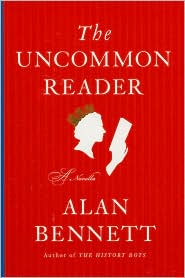
Nyss har jag avslutat The Uncommon Reader av Alan Bennett, en fin liten läspärla där författaren har lånat Englands drottning till huvudkaraktär.

Ett slumpmässigt besök på bokbussen som (tydligen) stannar precis utanför slottet får drottningen att pliktskyldigast låna en bok. Läsningen sparkar igång en bokslukarprocess hos regenten som får närmast karnevaliska konsekvenser, då kökspojken Norman får anställning som hennes litterära assistent och maktordningen kring hovet möbleras om.

Drottningen beklagar sig för sin privatsekreterare över slöseriet med alla författare hon har talat med utan att ha läst deras böcker:
'But ma'am must have been briefed, surely?'
'Of course, said the Queen, 'but briefing is not reading. In fact it is the antithesis of reading. Briefing is terse, factual and to the point. Reading is untidy, discursive and perpeptually inviting. Briefing closes down a subject, reading opens it up.' (s. 21)
Språket är urbota brittiskt, torrt och knastrigt och lågmält humoristiskt. Några underbara citat om läsningens fröjder fastnade särskilt, framförallt denna ordväxling:
'I would have thought,' said the Prime Minister, 'that Your Majesty was above literature.'
'Above literature?' said the Queen. 'Who is above literature? You might as well say one was above humanity.' (s 115)
Väl sammanfattat och gott så ...

onsdag 17 februari 2010

Bokmalan reafyndar!

Det var många år sedan som undertecknad tyckte att bokrean hade någonting att erbjuda. Jag minns att det senaste jag verkligen fyndade var två kompletta samlingar med Poe och Shakespeare. Men i år var det mycket som föll mig i smaken!


Jag hittade både Alexandra Kollontajs dagböcker 1930-40 och samlingen med Selma Lagerlöfs brev till Sophie Elkan, Du lär mig att bli fri.

En biografi om C.S. Lewis slank med - C S Lewis : mannen som skapade Narnia av Michael Coren.

Sedan passade jag på att handla två böcker som jag verkligen har suktat lite efter. Den ena var Sylvia Beachs bok om den fantastiska parisiska bokhandeln Shakespeare & Company. Den andra titeln var Nattens bibliotek av Alberto Manguel; en bok som berättar om bibliotekariens roll genom historien. Den torde vara fullproppad med finurliga anekdoter av litterär art och bibliotekskuriosa...

Eftersom jag nyss avslutat Boris Pasternaks Doktor Zjivago passade jag på att ta mig an nästa ryss, och köpte således Anna Karenina av Leo Tolstoj också.


Jag fyndade en CD-bok - Profeten av Kahlil Gibran. Den har jag fått i present av S och försökt läsa, men inte varit i tillräckligt lugn stämning för att kunna ta till mig, tror jag. Ser fram emot att lyssna på den.


Sist, och möjligtvis längst, så slog jag till på hela Marcel Prousts På spaning efter den tid som flytt. Åtta pocketar lång, inklusive register.

Det enda kruxet är var jag ska förvara dessa nyförvärv, då det för närvarande är fullkomligt fullt i bokhyllorna hemma ... Nåväl, som en brukar säga: nöden är uppfinningarnas moder!

måndag 1 februari 2010

Bokmalan tillbaka till skolbänken!

Om ni undrar varför det blir lite tyst emellanåt här på bloggen, så är det för att undertecknad har fått för sig att läsa en distanskurs (trots heltidsarbetandet). Kursen heter Biblioteksprojekt och ledarskap, och just nu håller jag på för fullt med kurslitteratur och att skriva en projektplan. Mycket intressent - jag rapporterar vidare sedan när kursen är klar.

Men, alas!, hindrar detta mig ifrån att läsa skönlitteratur så mycket som jag vill. Hence - den relativa tystnaden på bloggen. Hav dock hopp, kära läsare! Kursen är endast några veckor till, sedan bör ordningen vara återställd ...